Chinese autonomous driving company WeRide (NASDAQ: WRD) announced a strategic partnership with Danish shared electric mobility provider GreenMobility, becoming the first Chinese robotaxi company to enter the Nordic region.
Under the partnership, WeRide plans to launch commercial autonomous mobility services in Denmark in the first half of 2027.
Denmark marks WeRide's sixth European market, extending the company's international expansion of autonomous driving services beyond China.
New CEO Silvio Napoli unveiled Lucid's "operational reset" targeting $1.4 billion in cash savings, built around four "must-win" priorities: launching a midsize EV, completing the Saudi Arabia factory, cutting expenses, and robotaxis.
The $1.4 billion breaks down into $500 million in capital expenditure cuts, $600–800 million in projected inventory savings, and $200 million in operating expense reductions, according to Lucid's second-quarter earnings statement.
The plan aims to pull Lucid out of its spiral of growing EV inventory and unchecked spending, with robotaxis positioned alongside the Saudi factory and midsize EV as potential money-making priorities.
路西德新任首席执行官 Silvio Napoli 公布“运营重启”计划,目标实现14亿美元现金节省,围绕四大“必赢”优先事项展开:推出中型电动车、完成沙特阿拉伯工厂、削减开支和机器人出租车。
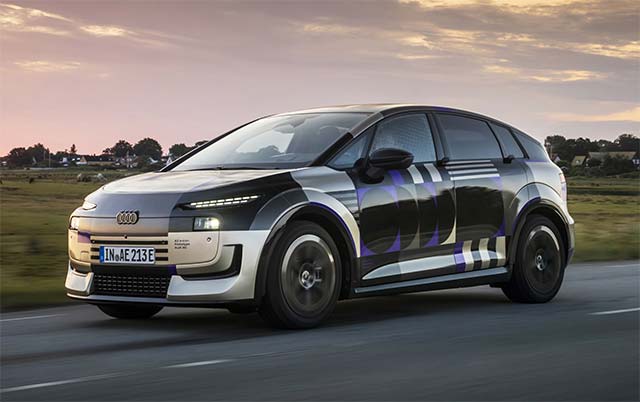
Preliminary WLTP figures show the upcoming Audi A2 e-tron consuming just 12.8 kWh per 100 km (4.85 mi/kWh) in its 140 kW (190 PS) version fitted with the optional Efficiency Package.
The result would make the A2 e-tron the most energy-efficient electric vehicle Audi has ever produced, setting a new efficiency benchmark within the automaker's EV lineup.
The A2 e-tron remains an upcoming compact electric hatchback, and the cited consumption figures are preliminary WLTP data pending official confirmation.
On July 30, 2026, the Philippines unveiled a $1 billion subsidy scheme aimed at jumpstarting its domestic automotive sector and attracting foreign investment as it enters Southeast Asia's intensifying EV race.
Manila is offering up to 40% co-funding for battery models under the program, designed to bolster local EV supply chains.
This comes as VinFast's Philippine affiliate, Green Smart Mobility (GSM), already operates EV taxis in Manila.
China's Ministry of Industry and Information Technology released the mandatory national standard "Intelligent Connected Vehicle Autonomous Driving System Safety Requirements" (GB 44721-2026) on July 30, 2026, effective July 1, 2027, applicable to M and N-category vehicles equipped with L3 or L4 systems.
The standard establishes comprehensive requirements for enterprise lifecycle safety mechanisms, system dynamic driving task execution capability, human-machine interaction and user disclosure protocols, and a multi-dimensional verification framework combining safeguard capability inspection, safety documentation review, and confirmatory testing methods.
Compared to the UN ADS GTR global technical regulation, China's standard provides more granular technical requirements tailored to China's road conditions and regulatory environment, establishing a unified safety baseline for autonomous driving commercialization.
Revoy EV, a San Francisco-based trucking startup, raised $27 million in a Series A round led by Standard Capital, with Doerr Capital, Time Ventures, Y Combinator, and Leap Ventures participating, according to Dealroom.
The company's system packs batteries and an electric drive axle into a tandem trailer that fits between a conventional semi truck and its trailer, aiming to electrify diesel semis in minutes without replacing the truck itself.
Revoy claims the retrofit can cut a fleet's fuel bill in half, and after years of development the concept is now taking real steps toward production.
In his first major interview as Porsche CEO, Michael Leiters confirmed the electric 718 model will still be built, ending months of speculation that it could be scrapped, though he showed signs of being less than fully committed to electrification.
Porsche was among the first automakers to launch a fully electric model under a standard model name rather than a separate "e" or "i" sub-brand, referring to the Taycan, and its two best-selling models, the Macan and Cayenne, are now both available as BEVs and selling well.
Despite these EV successes, Porsche — like other German automakers — has had a complicated, back-and-forth history with electrification and has been slower to electrify some of its other models.
保时捷新任CEO Michael Leiters在其上任后首次重要采访中确认,电动718车型仍将投产,结束了数月来关于该车型可能被取消的猜测,但他也流露出对电动化并非全力以赴的迹象。
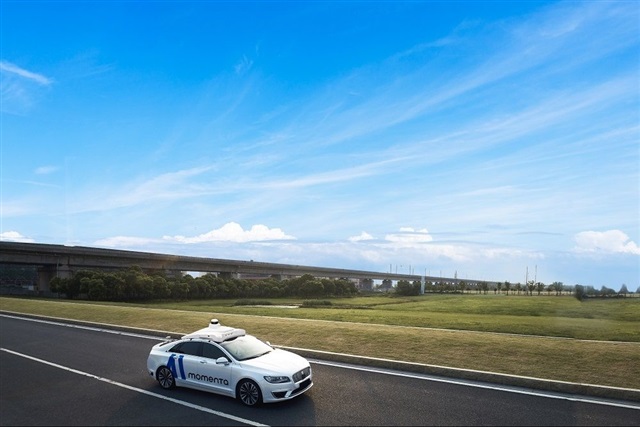
Momenta has become the first Chinese autonomous-driving company to receive a nationwide Level 4 testing permit from Germany's KBA (Kraftfahrt-Bundesamt, the Federal Motor Transport Authority), per digitimes (Aug 4, 2026).
The permit covers testing across all of Germany rather than a limited zone, expanding Momenta's legal operating scope in one of Europe's most tightly regulated automotive markets.
digitimes frames the approval as a step that "could matter well beyond Europe," widening the international robotaxi race as Chinese AV firms gain regulatory footholds in Western markets.
Chinese autonomous driving company WeRide (NASDAQ: WRD) announced a strategic partnership with Danish shared electric mobility provider GreenMobility, becoming the first Chinese robotaxi company to enter the Nordic region.
Under the partnership, WeRide plans to launch commercial autonomous mobility services in Denmark in the first half of 2027.
Denmark marks WeRide's sixth European market, extending the company's international expansion of autonomous driving services beyond China.
Momenta has become the first Chinese autonomous-driving company to receive a nationwide Level 4 testing permit from Germany's KBA (Kraftfahrt-Bundesamt, the Federal Motor Transport Authority), per digitimes (Aug 4, 2026).
The permit covers testing across all of Germany rather than a limited zone, expanding Momenta's legal operating scope in one of Europe's most tightly regulated automotive markets.
digitimes frames the approval as a step that "could matter well beyond Europe," widening the international robotaxi race as Chinese AV firms gain regulatory footholds in Western markets.
Preliminary WLTP figures show the upcoming Audi A2 e-tron consuming just 12.8 kWh per 100 km (4.85 mi/kWh) in its 140 kW (190 PS) version fitted with the optional Efficiency Package.
The result would make the A2 e-tron the most energy-efficient electric vehicle Audi has ever produced, setting a new efficiency benchmark within the automaker's EV lineup.
The A2 e-tron remains an upcoming compact electric hatchback, and the cited consumption figures are preliminary WLTP data pending official confirmation.
On July 30, 2026, the Philippines unveiled a $1 billion subsidy scheme aimed at jumpstarting its domestic automotive sector and attracting foreign investment as it enters Southeast Asia's intensifying EV race.
Manila is offering up to 40% co-funding for battery models under the program, designed to bolster local EV supply chains.
This comes as VinFast's Philippine affiliate, Green Smart Mobility (GSM), already operates EV taxis in Manila.
In his first major interview as Porsche CEO, Michael Leiters confirmed the electric 718 model will still be built, ending months of speculation that it could be scrapped, though he showed signs of being less than fully committed to electrification.
Porsche was among the first automakers to launch a fully electric model under a standard model name rather than a separate "e" or "i" sub-brand, referring to the Taycan, and its two best-selling models, the Macan and Cayenne, are now both available as BEVs and selling well.
Despite these EV successes, Porsche — like other German automakers — has had a complicated, back-and-forth history with electrification and has been slower to electrify some of its other models.
保时捷新任CEO Michael Leiters在其上任后首次重要采访中确认,电动718车型仍将投产,结束了数月来关于该车型可能被取消的猜测,但他也流露出对电动化并非全力以赴的迹象。
Revoy EV, a San Francisco-based trucking startup, raised $27 million in a Series A round led by Standard Capital, with Doerr Capital, Time Ventures, Y Combinator, and Leap Ventures participating, according to Dealroom.
The company's system packs batteries and an electric drive axle into a tandem trailer that fits between a conventional semi truck and its trailer, aiming to electrify diesel semis in minutes without replacing the truck itself.
Revoy claims the retrofit can cut a fleet's fuel bill in half, and after years of development the concept is now taking real steps toward production.
Drivalia secured a €48 million loan from the European Investment Bank (EIB) to procure around 2,900 fully electric vehicles for business and self-employed customers in Italy and Finland, to be offered via long-term rental contracts.
The EIB estimates the project will cut CO2 emissions by roughly 3,000 tonnes per year compared with an equivalent fleet of combustion-engine vehicles.
Drivalia, a car rental and mobility provider operating in 16 European countries, already offers electric vehicles through carsharing (e.g. the Fiat 500e), making this EIB-backed expansion part of its broader push into EV-based corporate mobility.
Nissan announced H1 2026 (January-June) production, sales, and export results on July 30: global sales fell 6.7% year-on-year to 1,506,052 units and global production fell 6.8% to 1,320,698 units, while exports from Japan rose 6.6% to 169,388 units.
Overseas production dropped 8.3% to 1,032,486 units with sharp regional divergence: US output surged 24.2% to 303,677 units and UK output edged up 0.3% to 133,605 units, while Mexico fell 25.8% to 253,572 units, China fell 16.3% to 224,070 units, and other regions declined 15.2% to 117,562 units.
Domestic (Japan) production slipped 1.2% to 288,212 units, comprising passenger cars down 1.0% to 258,426 units and commercial vehicles down 3.4% to 29,786 units.
Honda announced on July 30 that its H1 2026 (January–June) global four-wheeler production totaled 1,679,637 units, down 3.3% year-over-year and marking the third consecutive year of decline.
Domestic (Japan) production rose 10.9% to 361,738 units, its first increase in two years, while overseas production fell 6.5% to 1,317,899 units, its third straight annual decline.
North American production rose 6.6% to 871,963 units — its first increase in two years — with U.S. output up 9.8% to 543,655 units, underscoring a domestic and North American rebound against a weaker overall overseas trend.
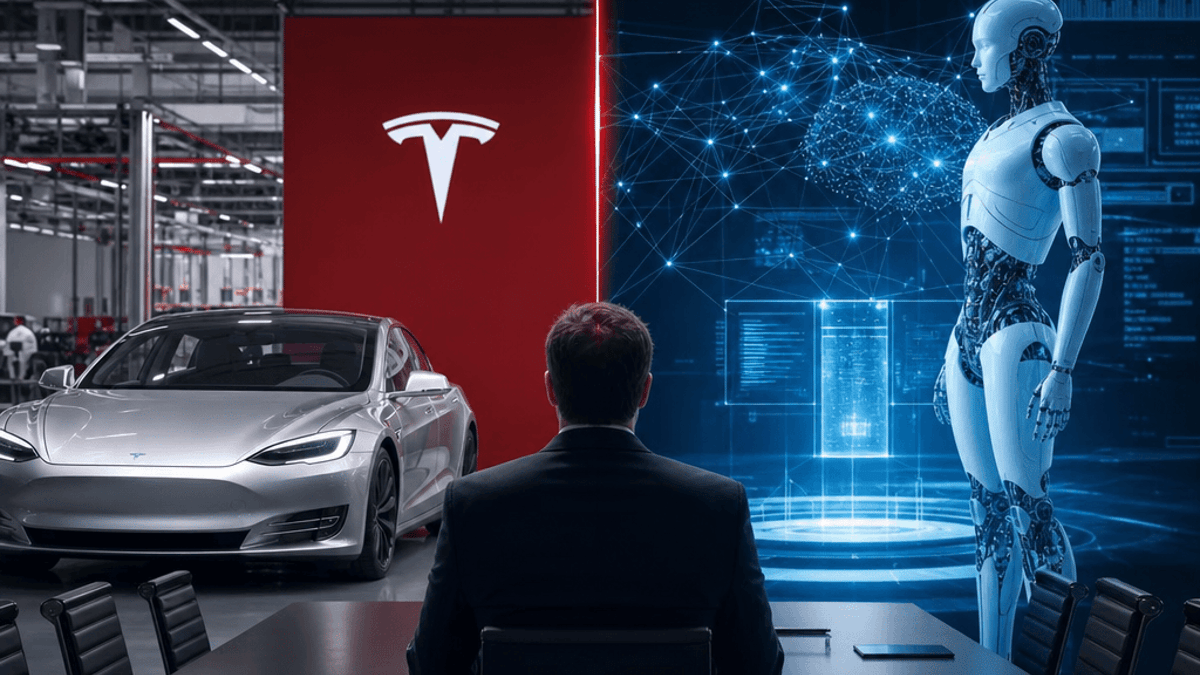
An exclusive TechCrunch analysis of seven years of Tesla earnings calls finds that CEO Elon Musk now spends roughly half his speaking time on robots and artificial intelligence rather than vehicle production, delivery numbers, or new models.
The shift raises questions about whether the future of the world's most valuable automaker lies more in autonomous systems and humanoid robots than in electric vehicles, even as investors continue to value the company largely on its automotive promises.
The finding points to Tesla's leadership increasingly repositioning the company's narrative around AI and robotics as core value drivers alongside — or ahead of — its traditional EV business.
Japan's dotD Inc. announced it has joined the Data Society Alliance (DSA), a public-private-academic body, as a full (regular) member.
DSA promotes fair and open cross-sector data distribution and utilization, and acts as a global partner of IDSA (International Data Spaces Association), FIWARE, and Gaia-X to help develop international data-flow standards.
dotD positions the membership as a move to strengthen data collaboration and connectivity specifically within the automotive sector.
The Ford Expedition ranks among the vehicles with the highest rates of fatalities to occupants of other vehicles in crashes it is involved in.
The Expedition joins a broader group of large vehicles that show similarly elevated other-driver death rates.
The pattern points to vehicle size and mass as a shared risk factor, placing the Expedition alongside other large SUVs and trucks in this high-risk class.
Waymo co-CEO Dmitri Dolgov, speaking at Y Combinator's Startup School, said "weak sensing" — his term for camera-only systems — hits a safety ceiling well short of the performance needed for full autonomy, in what Electrek calls the clearest technical case yet against camera-only self-driving.
Though he never named Tesla, whose self-driving bet rests entirely on cameras, Dolgov drew on nearly two decades of building Waymo's driver and Waymo's 220 million driverless miles, arguing that humans driving "with just eyes" is only "proof of existence" for camera-only viability, not proof it's sufficient.
The remarks reignite the industry-wide debate over minimum sensor requirements for autonomous driving, a foundational architecture choice — camera-only vs. multi-sensor fusion — that separates Tesla's and Waymo's competing approaches to full self-driving.
Global energy storage system (ESS) battery shipments rose 71% year-on-year to 461.3 GWh in H1 2026, with CATL retaining the top spot at 27.1% market share after shipping 125.0 GWh, up 81% year-on-year.
China's share of global ESS shipments fell to 43.9% from 50.5% a year earlier, meaning non-China markets accounted for the majority of shipments for the first time; per SNE Research, Eve Energy (10.4%) and Hithium (10.0%) ranked second and third.
CATL and BYD (7.7% share), both leading global EV battery suppliers, also ranked first and fourth in ESS, underscoring Chinese battery makers' expanding dual dominance across EV and stationary-storage supply chains.
CAIP Group and KraussMaffei signed a long-term strategic cooperation agreement on July 29, broadening their existing supplier-customer relationship into a joint technology and industrial-development partnership covering collaborative research, manufacturing processes and commercialization of new component solutions.
The partnership combines CAIP's experience developing and producing automotive interior and exterior components with KraussMaffei's expertise in injection molding, extrusion and reaction-process machinery, focusing on three areas: lower-carbon lightweight components, modular product development and more precise manufacturing.
The two companies see closer coordination among materials, production equipment and forming processes as essential to making components lighter, more sustainable and easier to manufacture at scale, with modular vehicle production named as another prospective area of cooperation and KraussMaffei continuing to promote an integrated materials-machinery-application approach.
BYD's all-electric kei car Racco went on sale in Japan on July 28, 2026, and has received more than 700 orders in its first week, Nikkei reported Monday, citing the company.
July registrations of the Racco totaled 125 units, covering the four days after launch, with BYD saying most were demo cars for dealerships rather than customer deliveries.
BYD is targeting 10,000 Racco orders in Japan by the end of 2026, according to a July 28 Reuters report citing a company executive, meaning the first week's 700-plus orders already represent about 7% of that goal.
Tesla's VP of AI confirmed that Max Speed control will not return to FSD (Supervised), with development effort instead going into the existing Speed Profiles feature.
Tesla is working on better learning each user's implied driving preferences, a direction the VP said aligns with Elon Musk's recent comments on upcoming features.
Those upcoming features include having FSD remember specific past driver interventions and adapt its behavior to each individual owner's driving preferences.
Ford's U.S. sales fell 10% year-over-year in the January-July 2026 period, totaling 1,176,466 vehicles sold.
The decline covers the first seven months of 2026 rather than a single month, pointing to a sustained pullback for one of the top U.S. automakers.
The source report, gated behind a browser-verification page, did not disclose a monthly July figure, model-level breakdown, or the causes behind the drop.
Aptiv PLC (NYSE: APTV) posted Q2 2026 U.S. GAAP revenue of $3.3 billion (up 2% year-over-year), GAAP net income from continuing operations of $298 million, adjusted EBITDA of $613 million, and adjusted net income per share of $1.63.
The company completed the spin-off of its Electrical Distribution Systems segment during the quarter — now reported as discontinued operations for all periods presented — and received a $1.9 billion cash dividend tied to the transaction.
For the first half of 2026, GAAP revenue reached $6.3 billion (up 2%) with adjusted EBITDA of $1,106 million; CEO Kevin Clark called the results the company's first as "New Aptiv," citing a reacceleration in revenue growth and year-over-year margin expansion as it sharpens its focus as a standalone automotive technology supplier.
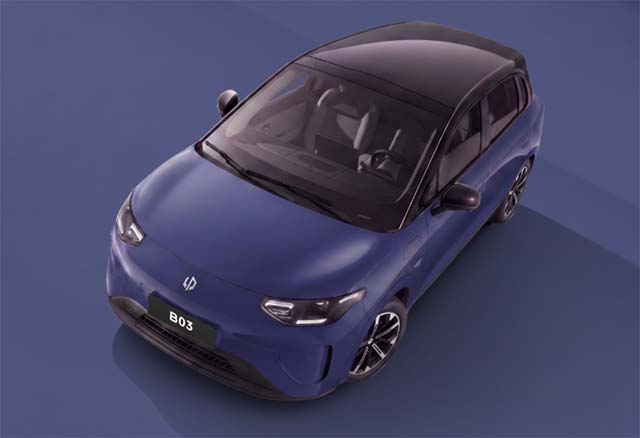
Leapmotor introduced the all-new A05 smart compact electric hatchback, which will be marketed globally under the name B03, offering up to 510 km of WLTC range along with AI-powered technology, fast charging and advanced safety features.
The model is positioned for urban drivers and targeted primarily at younger customers, combining modern styling, intelligent technology, everyday practicality and a spacious interior.
The launch expands Leapmotor's growing global EV lineup and is aimed at raising the bar in the competitive compact EV segment.
New CEO Silvio Napoli unveiled Lucid's "operational reset" targeting $1.4 billion in cash savings, built around four "must-win" priorities: launching a midsize EV, completing the Saudi Arabia factory, cutting expenses, and robotaxis.
The $1.4 billion breaks down into $500 million in capital expenditure cuts, $600–800 million in projected inventory savings, and $200 million in operating expense reductions, according to Lucid's second-quarter earnings statement.
The plan aims to pull Lucid out of its spiral of growing EV inventory and unchecked spending, with robotaxis positioned alongside the Saudi factory and midsize EV as potential money-making priorities.
路西德新任首席执行官 Silvio Napoli 公布“运营重启”计划,目标实现14亿美元现金节省,围绕四大“必赢”优先事项展开:推出中型电动车、完成沙特阿拉伯工厂、削减开支和机器人出租车。
Lars Ljungström took office today (August 3, 2026) as the new Chief Financial Officer and management board member of Cellcentric, succeeding outgoing CFO Niklas Ekström.
Ljungström spent the past 20 years mainly in the US within Volvo Group's commercial-vehicle businesses, most recently as Vice President of Strategy & Business Development at Volvo Penta North America, Volvo Group's engine and driveline specialist for marine and industrial applications.
Cellcentric is the Volvo Group–Daimler Truck joint venture developing hydrogen fuel-cell systems; Ljungström said he is looking forward to contributing to Cellcentric's further development and driving the ongoing industrialization of its fuel-cell technology.
Lars Ljungström于今日(2026年8月3日)正式就任Cellcentric新任首席财务官(CFO)兼管理委员会成员,接替即将卸任的CFO Niklas Ekström。
过去20年间,Ljungström主要在美国工作,长期任职于沃尔沃集团旗下商用车业务,最近担任沃尔沃彭塔北美(Volvo Penta North America,沃尔沃集团旗下船舶及工业应用发动机与传动解决方案专业公司)战略与业务发展副总裁。
Hyundai Motor Group has hired a senior autonomous driving AI executive with prior experience at Nvidia and Samsung, tasked with overseeing everything from core technology development to commercialization.
The move is part of Hyundai's broader effort to recruit global AI experts to advance its autonomous driving technology and accelerate execution of its future mobility strategy.
It follows a string of key talent hires in the SDV, autonomous driving, and physical AI fields aimed at strengthening the capabilities of Hyundai's Advanced Vehicle Platform (AVP) division.
ZF Friedrichshafen AG appointed Sebastian Schmitt, 44, to its Board of Management effective September 1, 2026, giving him oversight of the Electrified Powertrain Technology division he has led since November 2025, plus the Americas region.
Dr. Peter Holdmann, a Board of Management member since May 2024, informed the Supervisory Board, shareholders and CEO that he will not seek to renew his contract for personal reasons and will step down by mutual agreement on August 31, 2026.
As part of the reshuffle, CEO Mathias Miedreich — who previously oversaw Electrified Powertrain Technology, now assigned to Schmitt — will take over the Chassis Solutions division and group R&D from Holdmann, with Supervisory Board Chairman Dr. Rolf Breidenbach thanking Holdmann for his commitment and steady leadership in integrating and developing Chassis Solutions.
On June 25, 2026, the Tokyo Metropolitan Government launched the "Bus Driver Retention Support Special Allowance Subsidy," paying eligible drivers in their 1st through 10th year at operators running scheduled route services ¥10,000 per month (¥120,000 per year).
The article argues the raise is unlikely to meaningfully boost recruitment, since bus driver pay nationwide is already widely seen as unsatisfying for the workload, and a recent job ad promising "full weekends off" caused an uproar because bus operators run 365 days a year with shift-based days off unrelated to weekdays or weekends.
The author calls this a policy contradiction: while local government scrambles to retain drivers through subsidies, the bus industry is simultaneously advancing autonomous driving trials, exposing misaligned priorities between short-term labor support and the shift toward automation.
BMW will eliminate about 8,000 jobs — roughly 5% of its workforce — by the end of 2027, primarily in Germany, through a voluntary severance program already agreed with employee representatives.
The BMW Group employed 154,540 people at the end of 2025, the baseline against which the roughly 8,000 cuts represent about a 5% reduction.
The announcement ends BMW's status as an outlier: while rival automakers had already unveiled drastic cost-cutting measures, BMW had until now avoided the need to tighten its belt.
Ford has established a new organizational unit named the Product Creation and Industrialization organization, dedicated to next-generation vehicles and technology.
The new unit's mandate is to scale Ford's development and industrialization of next-generation vehicles and related technologies across the company.
The move signals a structural reorganization at Ford aimed at speeding the transition from next-gen vehicle/technology development to mass-market industrialization.
福特成立了一个名为“产品创建与工业化”(Product Creation and Industrialization)的新组织部门,专注于下一代车型与技术。
General Motors named Sterling Anderson, who joined the company in June 2025 as Chief Product Officer, to lead a product team of more than 20,000 people tasked with driving the next generation of automotive innovation.
Anderson joins GM after more than eight years at Aurora Innovation, the autonomous-trucking company he co-founded in 2016, and two years at Tesla where he led development of the Tesla Model X; he holds a Ph.D. in mechanical engineering and robotics from MIT.
In an October 9, 2025 interview with GM News editor-in-chief Eric J. Savitz, Anderson discusses AI and the future of mobility, with the conversation spanning autonomy, software, EVs and batteries, and charging — areas central to GM's product roadmap.
ZF's patent EP4780675A1, titled "Method for a Brake Controller for Operating an Electric Drive of a Trailer Vehicle, Computer Program and/or Computer-Readable Medium," was published by the European Patent Office within the last 10 days, per EPO DOCDB worldwide data.
The patent's core claim is a control method for a brake controller that operates the electric drive of a trailer vehicle.
The filing also covers a corresponding computer program and/or computer-readable medium implementing the method, extending protection beyond the method itself.
Yuxue Yang and 15 co-authors (arXiv:2608.02603, submitted Aug 3, 2026) introduce WorldExam, a hierarchical benchmark that evaluates video-generation world models beyond visual appearance, testing whether they can infer from a scene's state how the world should react and generate plausible consequences not explicitly given in the input.
The benchmark comprises 1,474 test cases across 8 tasks and four evaluation levels (Visual Quality, Control Adherence, Spatial Consistency, World Reactivity), spans camera-, action-, and language-driven model paradigms, and was used to assess 20 representative world models.
For autonomous driving, world models with strong reactivity are essential for simulation and motion planning since they must predict how surroundings respond to a vehicle's actions; WorldExam's results show camera-driven models lead on control adherence while action-driven models better capture dynamic interactions — a distinction directly relevant to selecting simulation backbones for AV development.
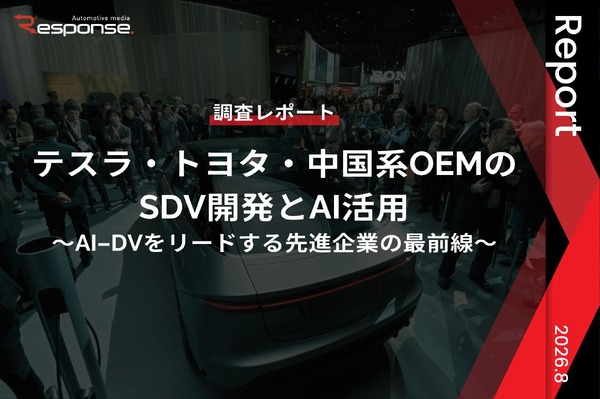
A response.jp research report examines the SDV (Software-Defined Vehicle) transition at Tesla, Toyota, and Chinese OEMs and their further evolution toward "AI-DV" (AI-Defined Vehicle), led by Tesla's full in-house buildout and a Huawei-driven Chinese tech ecosystem; it warns Japanese OEMs have fallen behind and must choose among Tesla's data-driven in-house model, Huawei's ecosystem-standardization model, or traditional mechanical-quality differentiation.
On strategy, Tesla runs a "first-mover" approach via complete in-house development, Toyota pursues a "safety-equipped late-follower" strategy, and Chinese OEMs fuse smartphone-industry culture with "ultra-fast development."
On AI-DV progress, Tesla's FSD V12-V14 "End-to-End AI revolution" opened the field, extended by Li Auto's Mind GPT dual system (End-to-End + VLM), XPeng's mass-produced E2E models shifting to mapless pure-camera sensing, and Huawei's Qiankun ADS 3.0/4.0 with WEWA architecture; the report benchmarks the most advanced systems head-to-head, comparing Tesla FSD V14 against Huawei Qiankun ADS 4.0.
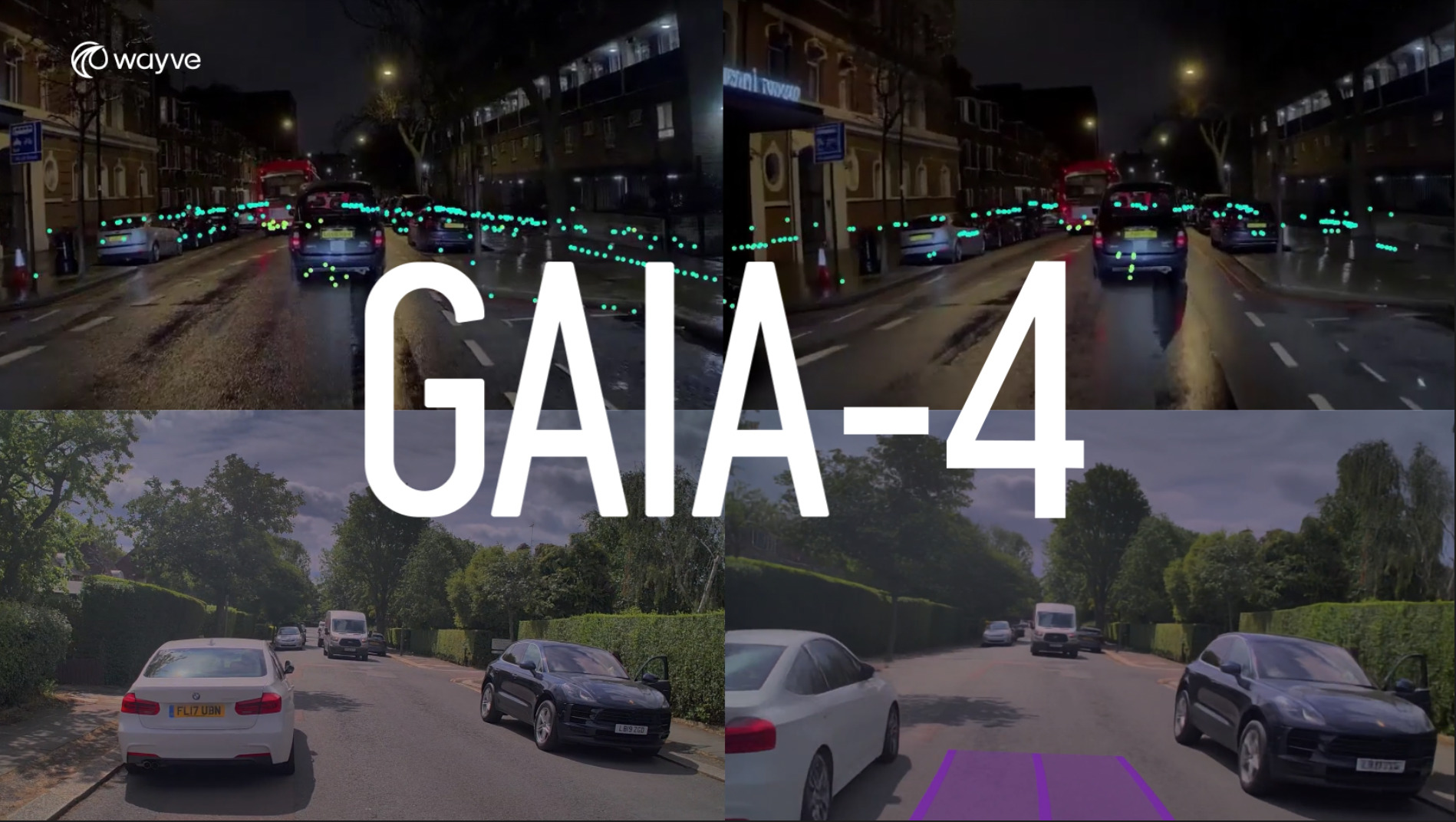
Wayve released GAIA-4 on 3 August 2026, the latest evolution of its GAIA world model, which puts the Wayve AI Driver in the loop and turns world modeling from scene generation into a way to measure end-to-end safety at scale.
The release responds to the AV2.0 shift from modular stacks with separate perception and planning components to end-to-end AI — a single network mapping raw sensor inputs directly to driving decisions — which lets autonomy generalize across cities, sensors, and vehicles but breaks the industry's traditional simulation-based safety-proving tools since the model can no longer be tested as separable parts.
Wayve argues real-world testing alone cannot prove safety because the miles needed to validate a model rise sharply as its performance improves while nearly all of those miles are uneventful, so the simulation stack itself must be rebuilt to close the gap.
Wayve于2026年8月3日发布GAIA-4,这是其GAIA世界模型的最新演进版本,将Wayve AI Driver纳入闭环,把世界建模从场景生成转变为大规模衡量端到端安全性的方法。
Continental had 5 new patent publications in the past 10 days per EPO DOCDB worldwide data, spanning autonomous-driving trajectory planning, motor-vehicle sensing, and tire technology across US and WO filings.
The headline filing US20260219677A1 covers a "method for determining a travel envelope along a planned travel trajectory" plus a control device, vehicle, and computer program; US20260219074A1 covers measuring the angular position of a rotary shaft of a motor vehicle; WO2026158891A1 and WO2026158892A1 are both titled "vehicle tire," alongside a further "method for producing a vehicle tire" filing.
The travel-envelope and shaft-angle-sensing patents bear on path-planning safety checks and e-motor control central to ADAS/AD stacks, while the paired tire-design and tire-manufacturing filings feed vehicle-dynamics and EV-efficiency work relevant to SDV platform development.
Hyundai published two Australian patent applications, AU2024409338A1 ("Complex Performance Shaped Steel and Manufacturing Method Thereof") and AU2024406162A1 ("Composite-Performance Shaped Steel and Manufacturing Method Thereof"), both newly listed within the last 10 days per EPO DOCDB worldwide data.
Both filings cover shaped steel products engineered for multiple/combined performance properties along with their associated manufacturing methods, though the source article page failed to load (showing only a "Just a moment..." placeholder), so no further technical detail is available.
The filings point to continued Hyundai investment in proprietary steel-forming processes, an area tied to automotive lightweighting and the cost/performance trade-offs of structural materials.
Hyundai's European patent EP4782296A1, "Method and Apparatus for Predicting State of Vehicle Based on Dynamic Data," was published within the last 10 days, per EPO DOCDB worldwide patent data.
Per the published title, the patent covers a method and apparatus that use dynamic (real-time operational) vehicle data as the input for predicting vehicle state; no further technical detail from the filing is available in this listing.
Vehicle-state prediction from dynamic data underlies core automotive-AI use cases, from autonomous-driving perception and ADAS safety functions to predictive-maintenance and fleet health-monitoring platforms.
On August 3, 2026, Filippo D'Addeo and five co-authors (Lorenzo Cipelli, Adriano Cardace, Emanuele Ghelfi, Andrea Zinelli, Massimo Bertozzi) posted "CalibBEV: LiDAR-Camera Calibration via BEV Alignment" to arXiv (2608.02309v1), proposing a Bird's Eye View (BEV) alignment approach for cross-modal sensor calibration.
CalibBEV unifies LiDAR and camera data into a shared 3D spatial representation by extracting sensor-wise BEV features from each modality with domain-specific architectures, then estimates the calibration matrix via a two-step process, beginning with an implicit alignment that directly regresses a coarse calibration matrix.
Accurate LiDAR-camera calibration underpins sensor fusion in autonomous-driving perception stacks, so a more robust, learning-based calibration method could reduce manual calibration overhead for AV and ADAS systems that rely on multi-sensor 3D perception.
Researchers propose FactorJEPA, a Joint Embedding Predictive Architecture (JEPA) built for DENSEWORLD—populous, crowded, chaotic Global South urban environments—paired with a dataset of 1,000 hours of drive-through, walk-through, and aerial video collected across 22 cities.
Standard JEPA world models degrade under high agent heterogeneity and partial observability; FactorJEPA instead factorizes scene structure into separate layout, agent, and interaction channels via visibility gating and disentangled subspaces to preserve dense interaction dynamics.
World models underpin autonomous driving perception and prediction; this work targets exactly the mixed-traffic, soft-boundary urban conditions that autonomous vehicles must handle to operate in Global South markets.
Researchers Yian Zhao, Ruochong Zheng, Hongcan Guo, Yu Yan, Jian Zhang, and Jie Chen released MiniWorld (arXiv:2608.01127v1, submitted August 2, 2026), a framework for training video world models entirely from scratch rather than adapting pretrained video generation models, as most prior work has done.
Video world models predict future observations conditioned on historical observations and control signals, enabling long-horizon generation through autoregressive state transitions, and — unlike conventional video generation models that mainly capture visual appearance and motion — learn the underlying dynamics governing how an environment evolves under an agent's actions.
By providing a foundation for embodied AI and interactive simulation, this research enables development of interactive AI systems that can model and respond to environment dynamics.
Toyota's international patent application WO2026160014A1, "Vehicle Surrounding Environment Display System, Control Method for Vehicle Surrounding Environment Display System, and Program," was published within the past 10 days, per EPO DOCDB worldwide patent data.
The filing spans three claim categories: the surrounding-environment display system itself, its control method, and the associated program.
The patent indicates Toyota's ongoing development of vehicle surrounding-environment display systems and control methods.
Bayerische Motoren (BMW) published patent DE102025102811A1, titled "Verfahren und Vorrichtung zur Unterstützung bei einem Querführungsmanöver" (method and apparatus for supporting a lateral guidance maneuver).
The publication was captured in EPO DOCDB worldwide patent data within the last 10 days, indicating a newly disclosed filing.
宝马集团(Bayerische Motoren)公开专利DE102025102811A1,题为《用于横向引导操纵辅助的方法和装置》(Verfahren und Vorrichtung zur Unterstützung bei einem Querführungsmanöver)。
Tesla's patent application US20260213262A1, titled "Electrode Film Mixtures with Solvent Additives for Use in Energy Storage Devices, and Methods Thereof," was published within the last 10 days, per EPO DOCDB worldwide patent data.
The filing covers electrode film mixture formulations that incorporate solvent additives, along with associated manufacturing methods, for use in energy storage devices such as batteries.
Electrode film composition is a core determinant of battery performance, durability, and manufacturing cost, so the filing reflects Tesla's continued R&D investment in proprietary battery materials — an area central to EV range and cost competitiveness.
BYD's international patent application WO2026158194A1 was published within the last 10 days, per EPO DOCDB worldwide patent data, covering an iron phosphide precursor and its preparation method together with a sodium iron phosphate pyrophosphate compound.
The filing's claims extend to an electrode sheet, a battery, and an associated electric device built from these materials, indicating an end-to-end sodium/iron-phosphate battery system.
As China's largest EV and battery maker, BYD's continued filings in iron- and sodium-based cathode chemistries point to ongoing work on lower-cost, non-lithium battery materials relevant to EV cost and supply-chain strategy.
CADENA reconstructs a 3D mesh into an editable parametric CAD program by adding one operation at a time, executing the partial program after each step and comparing it against the target so the model always sees what remains to be built — mirroring how human engineers work feature by feature.
The team also released CADENA-Bench, built from 3,396 real mechanical parts drawn from three industrial corpora, de-duplicated and grouped into six part families with results reported per family so weaknesses don't average away; every learned baseline loses roughly half its score moving from DeepCAD to real parts, and CADENA outperforms prior methods on DeepCAD, Fusion 360, MCB and CADENA-Bench.
For automotive engineering, where scanned or legacy component geometry must routinely be converted back into editable CAD, this stepwise, verifiable reverse-engineering approach points toward faster, more reliable part reconstruction and design-optimization workflows.
Hyundai published DE102025102522A1, covering a method and device for updating dynamic and static data, at the German Patent Office within the past 10 days per EPO DOCDB records.
Hyundai also published DE102025123687A1 for a flat fuel cell device, while Toyota published three related filings in the same window: DE102025145243A1 (display system and method), DE102026101811A1 (vehicle-side system and information processing device), and DE102026103260A1 (electrified vehicle).
The cluster of filings signals both automakers' continued patenting activity around fuel cell packaging, in-cabin display architecture, and vehicle data/OTA management—technical building blocks tied to EV powertrain efficiency and software-defined vehicle platforms.
Researchers Shuyao Shang, Yuqi Wang, Ruopeng Gao, Xu Chen, Tieniu Tan, Lue Fan and Zhaoxiang Zhang introduce PhiZero (arXiv:2607.28624, posted July 30, 2026), a physical world model built around "physical language," a compact discrete representation of world-state transitions.
The team contrasts PhiZero with existing physical world models, which typically predict future video directly in pixel space and leave world dynamics implicit inside high-dimensional visual predictors; PhiZero instead makes state transitions explicit, drawing on humans' ability to abstract predictive structure from visual experience into language for reasoning.
World models that render physical dynamics explicit and discrete are directly relevant to autonomous driving, where interpretable, generalizable prediction of how a scene will evolve underpins trajectory planning and collision-avoidance decisions.
Researchers propose 3DarkFusion, which introduces 3D-aware neural modeling to fuse extremely noisy RGB with Near-Infrared (NIR) imagery via neural rendering in 3D space, requiring no clean RGB supervision during training.
Unlike prior RGB-NIR low-light methods that depend on carefully curated paired training data and show limited robustness across different scenarios, 3DarkFusion implicitly fuses the two modalities and stays robust even under severe noise interference.
Robust low-light imaging from fused RGB-NIR sensing bears on nighttime perception for automotive camera systems, where sensor noise in the dark is a persistent challenge for ADAS and autonomous-driving vision pipelines.
Denso published three related German patents — DE102025152178A1, DE102025152175A1, and DE102025152181A1 — within the last 10 days, per EPO DOCDB worldwide data.
The filings cover a vehicle network system, its control method, and (in DE102025152181A1) an added manager control device that operates on the vehicle network.
The cluster points to continued Denso R&D on in-vehicle network architecture, a core building block for SDV and centralized electrical/electronic architecture strategies.
Toyota published patent DE102026101036A1 covering electrode active-material composite particles, an electrode composite material, and a battery.
A companion patent, DE102026101034A1, covers the same composite particles plus a manufacturing method for them, alongside an electrode mixture and battery.
Both filings appeared within the past 10 days per EPO DOCDB worldwide data, and such electrode-particle chemistry work bears directly on EV battery energy density and manufacturing cost—key levers in automakers' electrification competitiveness.
South Korean autonomous driving company Autonomous A2Z signed an 11 billion won (approximately $7.7 million) contract with UAE-based AI company Space42 to supply autonomous driving vehicles, technology, and an integrated operations system to TXAI, Space42's autonomous mobility service in the UAE.
A2Z will deliver 19 vehicles in total, including eight driverless Level 4 "ROii" roboshuttles, completely replacing TXAI's existing Chinese-made fleet.
Pilot operations will begin on Abu Dhabi's Saadiyat Island and Yas Island in the second half of this year, with plans to later expand into demand-responsive transit (DRT) and tourism shuttle services.
On Tuesday, August 4, 2026, Waymo removed the waitlist for its Dallas robotaxi service, letting all residents and visitors download the app and immediately hail a ride.
Rides to Dallas Love Field Airport remain unavailable as Waymo continues testing there with service expected "soon"; the company has operated in Dallas since last year, testing on public streets before announcing a 2026 launch, with Avis Budget Group handling depot operations — charging and maintenance — for its all-electric autonomous Jaguar I-PACE fleet.
The Dallas expansion is the latest step in Alphabet-owned Waymo's push to scale its self-driving robotaxi service across the United States, United Kingdom, and Europe.
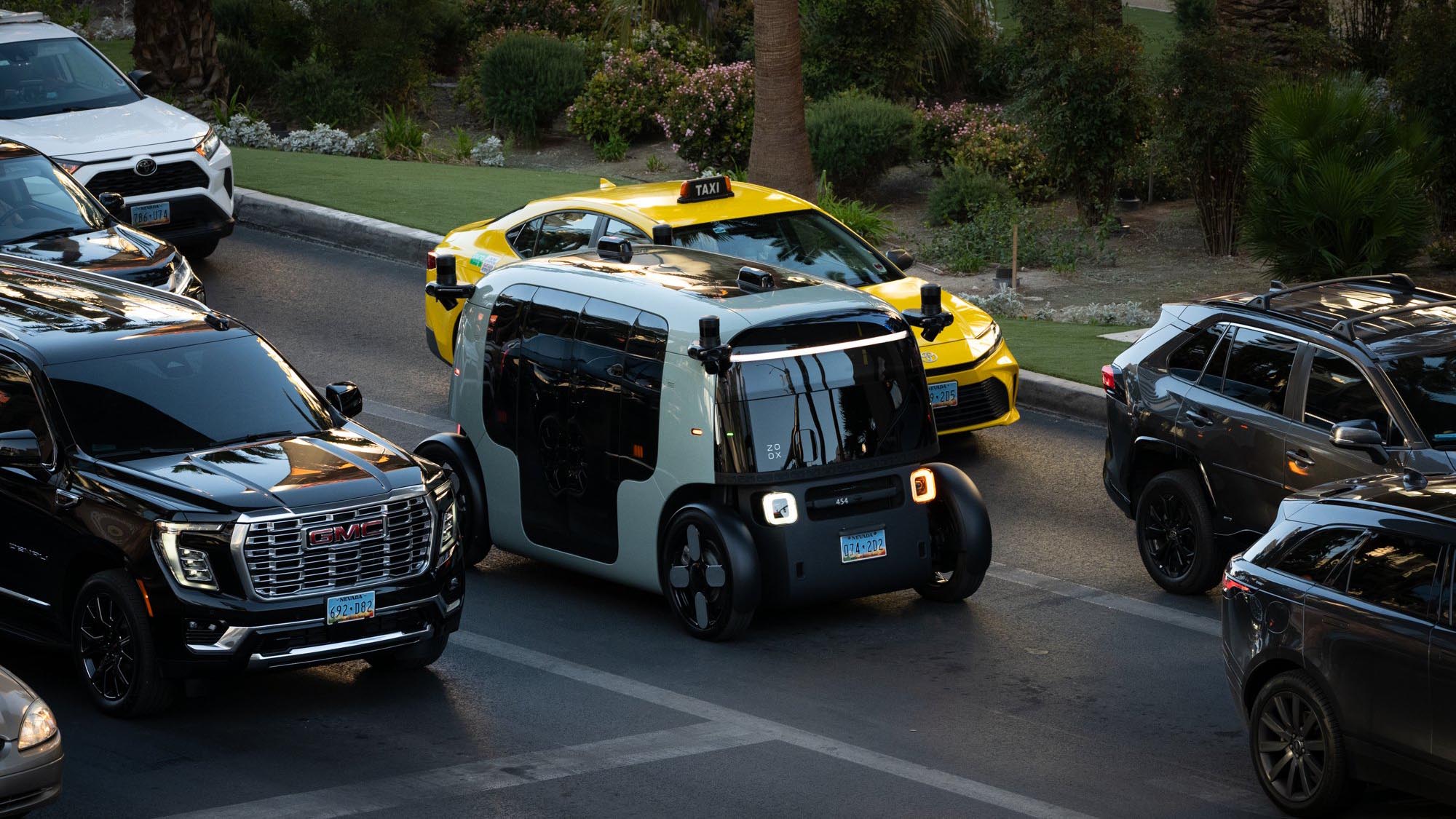
NHTSA granted Amazon-owned Zoox a temporary exemption, announced Thursday, to commercially deploy its purpose-built robotaxis — the first time the agency has approved a vehicle without traditional human controls to charge passengers for rides.
The exemption covers up to 2,500 vehicles annually over two years and is subject to what NHTSA calls an "enhanced, adaptable oversight structure that can evolve as Zoox's technology advances."
The ruling is part of a broader set of NHTSA actions to accelerate autonomous vehicle development in the US and removes what the agency describes as the last major federal regulatory barrier to commercial driverless robotaxi service.
BYD's premium DENZA brand opened pre-sales for the Z9S battery-electric sedan on August 3, 2026, offering three variants — FLASH Charging Premium, FLASH Charging Flagship, and e³ FLASH Charging Performance — priced at 319,800, 349,800, and 389,800 yuan (about $47,100 and up), with final prices to be confirmed at official launch.
DENZA claims the Z9S delivers the world's longest range for a mass-produced all-electric model at 1,100 km CLTC, breaking the previous 1,036-km record held by the Denza Z9GT.
The Z9S adopts a low-slung fastback profile under DENZA's "Elegance in Motion" design language, underscoring how BYD's premium arm is using extreme CLTC range as its main differentiator in China's increasingly crowded high-end EV segment.
Nio will bring its first fifth-generation battery swap station online on August 7, 2026 in Quanzhou, Fujian province, which will also mark the company's 4,000th swap station in China.
The new station supports all three of Nio Inc's brands — Nio, Onvo and the compact Firefly — with Firefly gaining access to the swap network for the first time.
Nio plans to add more than 1,000 battery swap stations in 2026, and once fifth-generation sites are rolled out, all three brands will share the same unified swap network.
Per the original headline, Horizon Robotics has entered a partnership with Volkswagen to deploy its technology across multiple mass-produced electric vehicle models.
The source article page returned a 404 error, so specific vehicle models, launch timeline, and the technical scope of the Horizon–Volkswagen integration remain unconfirmed.
The tie-up reflects the broader trend of Chinese ADAS/AI chip suppliers being integrated into global OEM production lines, with Volkswagen among the multinational automakers adopting China-developed autonomous-driving compute for mass-market EVs.
Chinese bus manufacturer Jinlu (金旅) officially launched an autonomous-driving bus named "Guanhu Shenche" (观虎神车), per a report carried by Sina Mobile News.
The launch is marketed by Jinlu as the world's first vehicle of its kind, positioning the company as a first-mover in autonomous public-transit buses.
The source item is a brief wire headline with no article body, specs, deployment city, or launch date disclosed—only the product name and "global first" claim are confirmed.
Amazon-owned autonomous vehicle company Zoox received a temporary exemption from the National Highway Traffic Safety Administration (NHTSA) last week, clearing it to begin charging for robotaxi rides in Las Vegas.
Zoox says it will start offering paid rides in Las Vegas this month, using autonomous vehicles built without a steering wheel or other traditional driving controls.
The paid robotaxi launch represents a commercial milestone for Zoox on the Las Vegas Strip, marking an early real-world deployment of driverless ride-hailing at commercial scale.
Tesla's global FSD (Supervised) fleet surpassed 13 billion cumulative real-world miles as of Aug 3, 2026, according to X user Sawyer Merritt, after crossing the 12 billion-mile mark on July 17, 2026.
Per a reply from X user kanishka in the same thread, the fleet's first 10 billion miles took over five years to accumulate, while the move from 12 billion to 13 billion took just a couple of months.
The accelerating mileage growth directly expands Tesla's real-world training data for its end-to-end FSD neural networks, a data-flywheel scale that commenters in the thread say no other automaker currently matches.
Waymo has unveiled the Ojai, a robotaxi developed in partnership with Chinese automaker Zeekr and the first vehicle to carry Waymo's 6th-generation autonomous driving system.
The Ojai is also the first Waymo robotaxi to integrate Google's Gemini voice assistant, pairing the new driving stack with conversational AI for riders.
The launch lands amid what industry coverage frames as a global robotaxi race, underscoring how automakers and AI providers are converging on production ride-hailing vehicles as the next competitive battleground.
Xiaopeng officially launched the P7+ in August 2026, priced from ¥186,800, with AI smart-driving standardized across all trims.
All variants use a dual-camera, pure-vision end-to-end second-generation VLA large model that supports human-machine co-driving at speeds up to 130 km/h.
Xiaopeng positions the P7+ as the most capable smart-driving pure-electric sedan available under ¥200,000, signaling that L2+ autonomous-driving hardware is now standard even in the sub-¥200,000 price segment.
Oji Logistics and T2 began commercial operation of autonomous trucks for regular transport of paper products on a roughly 510km round-trip route between Oji Logistics' Ariake branch in Koto Ward, Tokyo, and its Ajikawa branch in Osaka.
Level 2 autonomous driving is used on about 420km of that route, from the Ayase Smart IC on the Tomei Expressway to the Kumiyama Junction on the Keishin Bypass, following four verification runs conducted between October 2025 and May 2026 that confirmed no issues with safety or transport quality.
Oji Logistics is pursuing logistics DX to address driver shortages and ease driver workload, and based on the commercial results is considering joining T2's planned Level 4 autonomous truck trunk-line transport service targeted for fiscal 2027 onward.
On August 1, Hongqi Tiangong launched the new-generation Tiangong 08 670 Max, a mid-large all-electric SUV with full-suite driving assistance and a smart cockpit standard across all trims; guidance price ¥197,900, limited-time price ¥179,900 after deposit-boost and purchase-tax subsidies — ¥18,000 below the outgoing model's ¥215,900 starting price and about ¥40,000 below rivals like Li Auto i6, Xpeng G9 and IM Motors R7 (all above ¥240,000).
The car also comes standard with an 800V high-voltage platform and a "Xuanjia" battery exceeding national safety standards; in a livestreamed real-road test in Shenzhen led by Tiangong division GM Feng Biao and Zhuoyu Technology CEO Shen Shaojie, the Hongqi Sinan ADAS — built on Zhuoyu's tri-camera stereo vision with a bionic dual-eye plus telephoto mono setup — detected targets beyond 600m with 5cm obstacle-ranging accuracy, and its 4.1 end-to-end model improved lane-change decisions and cornering/acceleration smoothness even in heavy rain.
The Hongqi Lingxi cockpit switches from the Snapdragon 8650P to a 5nm 8295P chip, adds dual 15.6-inch screens plus a 65.5-inch AR-HUD, and pairs with a parking system that remembers routes up to 2km across multiple floors (20 saved routes) with parking-in as fast as 20 seconds — signaling how mainstream Chinese EV makers are pushing full ADAS and cockpit AI down into the ¥180,000 price segment.
SiEngine Technology, the automotive semiconductor company incubated by ECARX Holdings (Nasdaq: ECX), secured US$200 million in new equity capital from institutional investors over H1 2026, a milestone funding round for one of China's top vehicle-grade chip designers.
SiEngine was co-founded in 2018 by ECARX and Arm China and, after eight years of collaboration, has grown into an independent automotive semiconductor enterprise with ECARX remaining its largest single shareholder.
The new capital will fund SiEngine's next-phase R&D and production capacity expansion, reinforcing ECARX's vertical silicon-to-software integration strategy for its full-stack software-defined-vehicle (SDV) ecosystem.
Chinese automotive brand Venucia (启辰) has partnered with ride-hailing platform Hellobike's Robotaxi service, marking mass-production delivery of autonomous taxis under the collaboration.
The tie-up pairs an automaker's manufacturing scale-up with a mobility platform's robotaxi operating network, moving the project from pilot testing to production delivery.
The deal adds Venucia and Hellobike to the growing list of automaker-mobility platform pairings pursuing commercial autonomous taxi deployment in China, underscoring the automotive industry's shift toward scaled self-driving ride-hailing.
On July 24 local time, Oman's Ministry of Transport, Communications and Information Technology (MTCIT) issued Maple-Leaf Mobility a national-level pilot access letter and exclusive commercialization approval — the first AV commercialization license ever granted at the national-government level to a company globally — with Hainan's Haicheng Investment, a participant in Maple-Leaf's Series B round, having helped enable the deal.
The authorization covers robotaxis, robobuses, and autonomous logistics vehicles, with the pilot launching first in Oman's Salalah Airport area before expanding nationwide; Maple-Leaf already operates across 50-plus Chinese cities with over 2,000 service outlets and a fleet exceeding 5,000 vehicles.
The deal follows a June 2026 on-site inspection by an Oman MTCIT delegation of Maple-Leaf's Beijing operations center and robotaxi/robobus road tests in Haikou, and is framed as a Belt and Road cooperation milestone and a step toward Oman's 'Vision 2040' goal of reducing oil dependency.
Changan Deepal opened pre-sales for the revamped S05 SUV on July 30, 2026, priced from 119,900 yuan ($17,660) to 151,900 yuan, with higher-trim models equipped with LiDAR.
The updated S05 also gains a 3nm cockpit chip, upgrading both its assisted-driving and in-car infotainment systems.
Deepal, Changan's EV brand, sold 164,156 vehicles in the first half of 2026, up 14.6% year-on-year, underscoring the model line's importance to the brand's mass-market push.
A Tesla Robotaxi was reported driving the wrong way on a road in Tampa, Florida, according to local station WFLA.
The wrong-way incident has drawn scrutiny over the reliability of the vehicle's autonomous driving system and over Tesla's deployment protocols in the city.
The case feeds into broader safety and regulatory debates as robotaxi services expand into more U.S. urban areas without clear oversight frameworks.
China's Ministry of Industry and Information Technology released the mandatory national standard "Intelligent Connected Vehicle Autonomous Driving System Safety Requirements" (GB 44721-2026) on July 30, 2026, effective July 1, 2027, applicable to M and N-category vehicles equipped with L3 or L4 systems.
The standard establishes comprehensive requirements for enterprise lifecycle safety mechanisms, system dynamic driving task execution capability, human-machine interaction and user disclosure protocols, and a multi-dimensional verification framework combining safeguard capability inspection, safety documentation review, and confirmatory testing methods.
Compared to the UN ADS GTR global technical regulation, China's standard provides more granular technical requirements tailored to China's road conditions and regulatory environment, establishing a unified safety baseline for autonomous driving commercialization.
NHTSA has upgraded its investigation into engine failures in Ford vehicles equipped with the 1.0L EcoBoost engine, raising the probe's level of scrutiny.
The upgrade follows a prior recall, a customer service program, and multiple lawsuits already filed over the engine's reliability issues.
The escalation signals elevated warranty, liability, and quality-control exposure for Ford tied to its widely used three-cylinder EcoBoost powertrain.
On July 27, 2026, China's automotive standardization authority announced it has released mandatory standards for combined driving assistance and will soon release mandatory standards for autonomous driving, while co-leading the official approval of UN global technical regulations for autonomous driving.
China implements a tiered approach: recommended standards as initial guidance, mandatory standards as safety baseline, and domestic-international standard coordination; testing scenarios and methods are standardized based on China's unique road environment and regulatory context.
These mandatory standards will regulate OEM R&D and marketing behavior, strengthen full-lifecycle safety management, provide technical foundation for product admission and government oversight, enhance consumer trust, and support industry quality development and enterprise internationalization.
The U.S. National Highway Traffic Safety Administration (NHTSA) opened a preliminary investigation on August 3, 2026 into roughly 1.2 million Tesla vehicles, covering Model 3 from model years 2018-2020 and Model Y from model years 2021-2023.
The probe was triggered by 156 owner complaints alleging that the front lower control arm (lower lateral link) can unexpectedly detach from the vehicle while driving.
NHTSA states such a failure severely impairs steering and directional stability, posing significant safety risks to vehicle occupants and other road users.
The U.S. Department of Transportation's National Highway Traffic Safety Administration (NHTSA) announced a $20 million investment in AI and in-car technology to help law enforcement combat dangerous driving.
The announcement cites Tesla's Full Self-Driving (FSD) as evidence of AI's potential, noting the system has logged over 13 billion miles driven — including more than 5 billion city miles — with Tesla reporting 7 times fewer major and minor collisions.
The funding underscores growing regulatory interest in AI-driven vehicle safety systems, with potential implications for how autonomous driving technologies are evaluated and adopted under future safety frameworks.
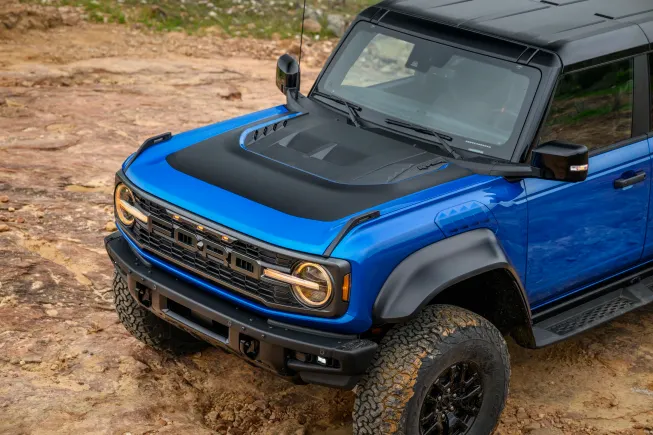
Ford issued a recall on July 31, 2026 covering roughly 566,000 Bronco SUVs from model years 2021-2026, built between September 2020 and June 2026, after finding insufficient abrasion protection on the underhood engine wiring harness.
Repeated relative movement can chafe the harness and trigger a short circuit that raises fire risk; Ford estimates about 1% of the recalled vehicles actually exhibit the defect.
The recall traces back to a June 18, 2026 Critical Concern Review Group investigation into Bronco fire incidents, and starting August 24 owners can get free installation of protective plastic sheathing and abrasion tape at Ford or Lincoln dealers.
Automakers had fitted vehicles with a "smart-driving blue light" that flashes when advanced driver-assistance (ADAS) features are engaged, visually signaling to onlookers that the car is running in autonomous/assisted-driving mode.
Regulators banned the indicator because blue is not an approved exterior vehicle-light color under national standards, and it can be confused with other road signals and mislead surrounding drivers about the car's actual automation level; the move also targets automakers that have overstated their ADAS capabilities in marketing.
The ban signals broader regulatory tightening on how Chinese automakers market self-driving features, pushing the industry away from "tech-gimmick" showmanship toward safety and truthful capability claims.
On July 28, online reports claimed China's MIIT had stopped approving new vehicle models equipped with ADAS "blue light" indicators; the next day the China Automotive Standardization Institute (a CATARC-affiliated body) stated the lights cause nighttime glare that impairs other drivers' judgment and make equipped cars more likely to be cut off, noting that GB 4785 (rules for exterior lighting and light-signaling devices on vehicles and trailers) does not include blue as an approved light color.
Automaker responses diverged: Geely told Yicai it was aware of the reports and awaiting further guidance from authorities, while NIO vice president Ma Lin acknowledged some blue lights pose safety risks but said he had not seen an explicit written ban.
The indicator originated as a safety feature rather than a marketing gimmick: after incidents such as Cruise's robotaxi dragging a pedestrian 6 meters in 2024, SAE had proposed a 2019 recommended standard specifying a blue-green (490-500nm) light — chosen by first adopter Mercedes-Benz to avoid conflict with traffic/vehicle lights and to stay visible across the eye's cone-to-rod transition; China's MIIT released draft comments for GB 5920 in 2021 citing 2018 research based on UN Regulation No.148 and SAE J3134, and Li Auto's L9 adopted the light the following year, ahead of the regulation's finalization.
China disclosed on August 2, 2026, per a CCTV News report, the implementation requirements of recommended national standard GB/T 46991.1-2025, which sets accuracy and durability requirements for battery health display systems in light-duty passenger EVs.
The standard limits the deviation between the dashboard-displayed battery available energy status and the physically measured value to no more than 5%.
It also establishes reference levels for battery durability, giving buyers and regulators a standardized benchmark to gauge battery degradation and display reliability across the light-duty EV segment.
China's Ministry of Foreign Affairs on July 29 criticized new U.S. restrictions on advanced robot imports, opposing Washington's expansion of "national security" to suppress Chinese companies and warning that protectionism will harm U.S. businesses and consumers, while vowing to take necessary measures to protect Chinese firms' legitimate rights.
The response came after the U.S. Federal Communications Commission announced on July 28 a ban on imports of Chinese-made humanoid and quadruped robots and new restrictions on network-connected power inverters, citing risks to U.S. supply chains, critical infrastructure, and cybersecurity.
Momenta announced it has secured a nationwide Level 4 autonomous driving testing permit in Germany.
On July 30, Chery's AiMOGA Robotics announced cumulative global deliveries had surpassed 2,000 units, with products and services now reaching more than 60 countries and regions.
The company marked the milestone with delivery and overseas-shipment ceremonies, signaling a shift from one-off product exports to larger-scale, systematic international expansion since starting overseas in Malaysia in 2025 with automotive marketing services.
In 2026 AiMOGA expanded further by joining Automation Thailand 2026 and opening its first AI Experience Center in Vietnam, with its robots now used in automotive marketing, public-space navigation, smart policing, and medical guidance.
Ford CEO Jim Farley said during the company's Q2 2026 earnings call on July 28, 2026 that Ford backs a comprehensive overhaul of the USMCA to help U.S. automakers compete with rivals from Japan and South Korea.
The USMCA governs nearly $1.3 trillion in annual trilateral trade and entered its formal review period on July 1, 2026, with negotiations set to run through 2036 unless the U.S., Mexico, and Canada agree to extend it another decade.
Farley's public push on trade policy during an earnings call signals how central USMCA terms have become to Ford's competitive strategy against Asian rivals with entrenched regional supply chains.
China's Ministry of Industry and Information Technology (MIIT) stated it will accelerate the drafting and rollout of the "15th Five-Year Plan" (covering 2026-2030) for the intelligent connected new-energy vehicle industry.
The announcement covers the industry's development plan specifically for intelligent connected new-energy vehicles (ICNEVs), the segment combining smart-connected and new-energy vehicle technologies.
The statement was carried the same day by multiple Chinese outlets, including 观点网 (Guandian.com) and 金融界 (Jrj.com), underscoring its status as an official MIIT policy signal.
China's Ministry of Industry and Information Technology (MIIT) has reportedly ordered passenger vehicle makers to immediately stop installing external blue indicator lights — known in the industry as "little blue lights" — that signal when driver-assistance systems are active.
The order, revealed via a notice screenshot shared Wednesday by auto industry blogger Sun Shaojun, cites non-compliance with GB 4785, China's national standard governing vehicle-light colors.
MIIT will next study how to handle vehicles already sold with the blue lights installed.
Hyundai is recalling roughly 40,000 units of its Inster electric minicar worldwide due to acute fire risk, with nearly 15,000 vehicles affected in Germany alone.
Germany's Federal Motor Transport Authority (KBA) has opened official oversight of the recall under reference number 16829R, covering all vehicles built between February 14, 2024 and April 14, 2026.
Given the long shipping time from the Korean factory to Germany, even Inster units registered in Germany in recent weeks are likely among those affected; the model launched in Germany in December 2024.
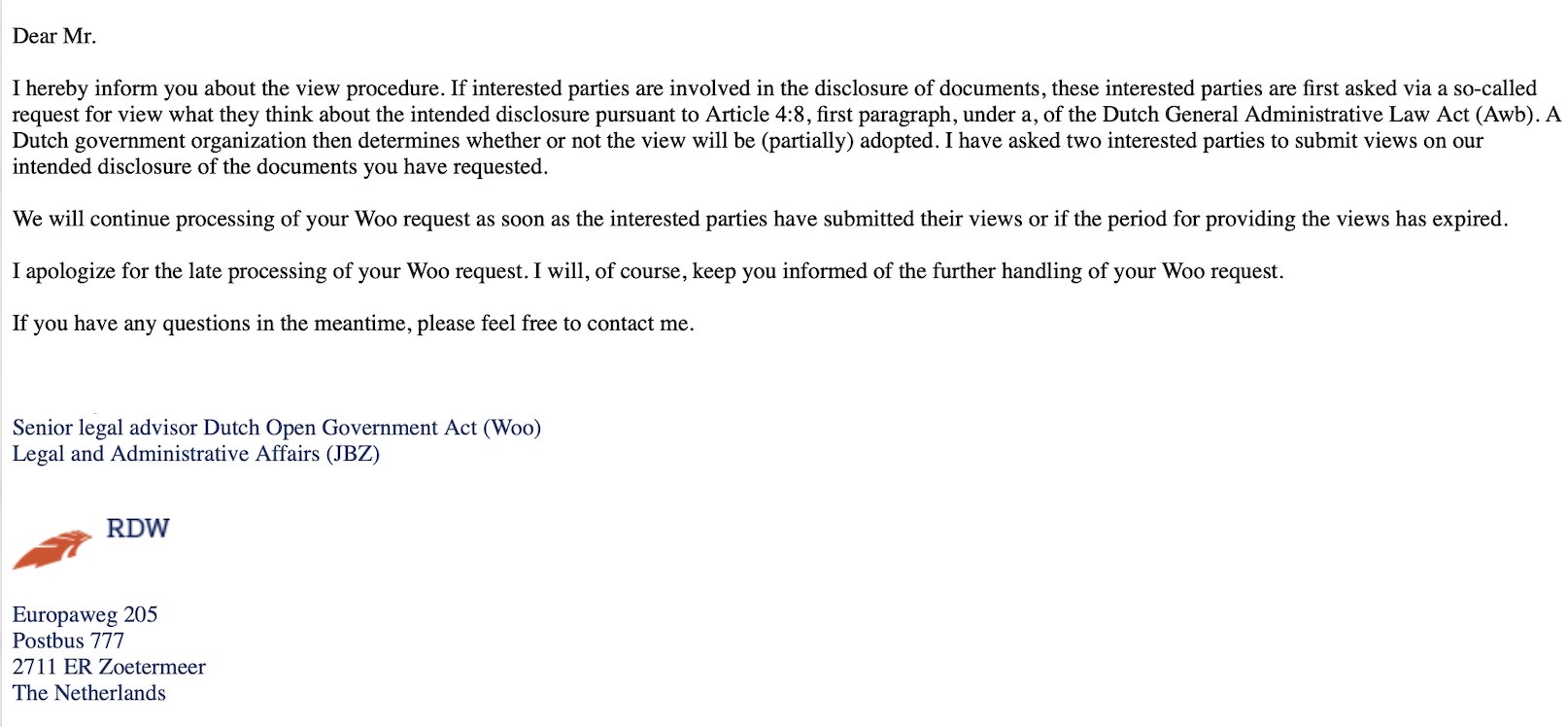
An X user submitted a formal WOB/WOO (Dutch freedom-of-information) request to the RDW, the Netherlands' vehicle authority, seeking all documents related to Tesla FSD's approval process, citing persistent misinformation about FSD's safety in Europe.
The RDW has received and is acting on the request, and is now compiling the relevant documents ahead of public disclosure.
The requester argues that once released, the documents will settle the debate for politicians in several countries who have cited "insufficient data" as grounds to question FSD's safety, replacing speculation with underlying facts.
Seen something we missed? Drop a line, a link, or both — it goes through the same fetch, scoring and editorial review as everything else.看到我们漏掉的东西?写一句话、贴个链接,或者两者都给——它会走和其他信号完全相同的抓取、评分与人工终审流程,不会直接上线。