AUTOSIGNAL
Human-curated. Expert-annotated. Every signal traced to source.
人工精选 · 专家点评 · 每条信号可溯源
Research & IP研究与专利
Wayve Launches GAIA-4, Closed-Loop World Model That Puts Its AI Driver in the Loop to Measure End-to-End SafetyWayve发布GAIA-4:闭环世界模型引入AI Driver,量化端到端自动驾驶安全性
S 3.3
T1
1 sources1 个来源
R7-research
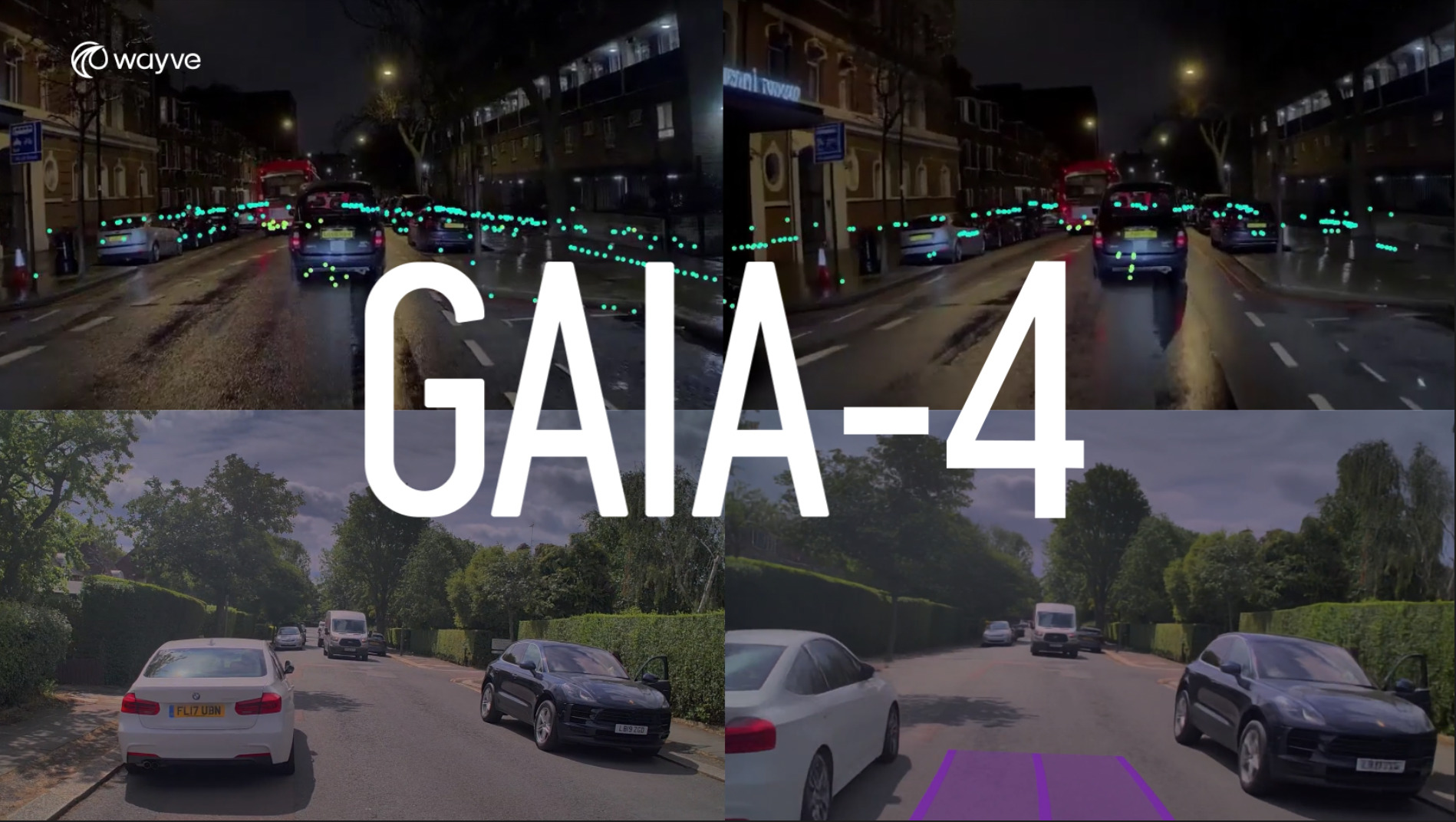
- Wayve released GAIA-4 on 3 August 2026, the latest evolution of its GAIA world model, which puts the Wayve AI Driver in the loop and turns world modeling from scene generation into a way to measure end-to-end safety at scale.
- The release responds to the AV2.0 shift from modular stacks with separate perception and planning components to end-to-end AI — a single network mapping raw sensor inputs directly to driving decisions — which lets autonomy generalize across cities, sensors, and vehicles but breaks the industry's traditional simulation-based safety-proving tools since the model can no longer be tested as separable parts.
- Wayve argues real-world testing alone cannot prove safety because the miles needed to validate a model rise sharply as its performance improves while nearly all of those miles are uneventful, so the simulation stack itself must be rebuilt to close the gap.
- Wayve于2026年8月3日发布GAIA-4,这是其GAIA世界模型的最新演进版本,将Wayve AI Driver纳入闭环,把世界建模从场景生成转变为大规模衡量端到端安全性的方法。
- 该发布回应了AV2.0从感知与规划分离的模块化技术栈向端到端AI(单一网络直接将原始传感器输入映射为驾驶决策)转变的趋势——这使自动驾驶能在不同城市、传感器和车型间泛化,但也让行业传统的仿真安全验证工具失效,因为该模型不再是可分离的独立部件。
- Wayve指出,仅靠真实道路测试无法证明安全性,因为随着模型性能提升,验证所需的行驶里程会急剧增加,而其中几乎全部里程都平安无事,因此仿真技术栈本身必须被重建以弥合这一差距。